Seeking Jesus First Feb. 13, 2026

I Have Food to Eat Part One
Today’s Reading: John 4:31–34
(Read the full passage before reflecting below.)
“In the meantime His disciples urged Him, saying, ‘Rabbi, eat.’
But He said to them, ‘I have food to eat of which you do not know.’” (John 4:31–32, NKJV)
The disciples return from the city carrying bread. Jesus has been weary, sitting by the well. Naturally, they assume He must be hungry.
But Jesus answers in a way that echoes the entire Gospel: He speaks of another dimension of life.
“I have food to eat of which you do not know.”
Once again, the disciples think naturally. “Has anyone brought Him anything to eat?” They miss the meaning. Jesus is not rejecting physical food. He is revealing spiritual sustenance.
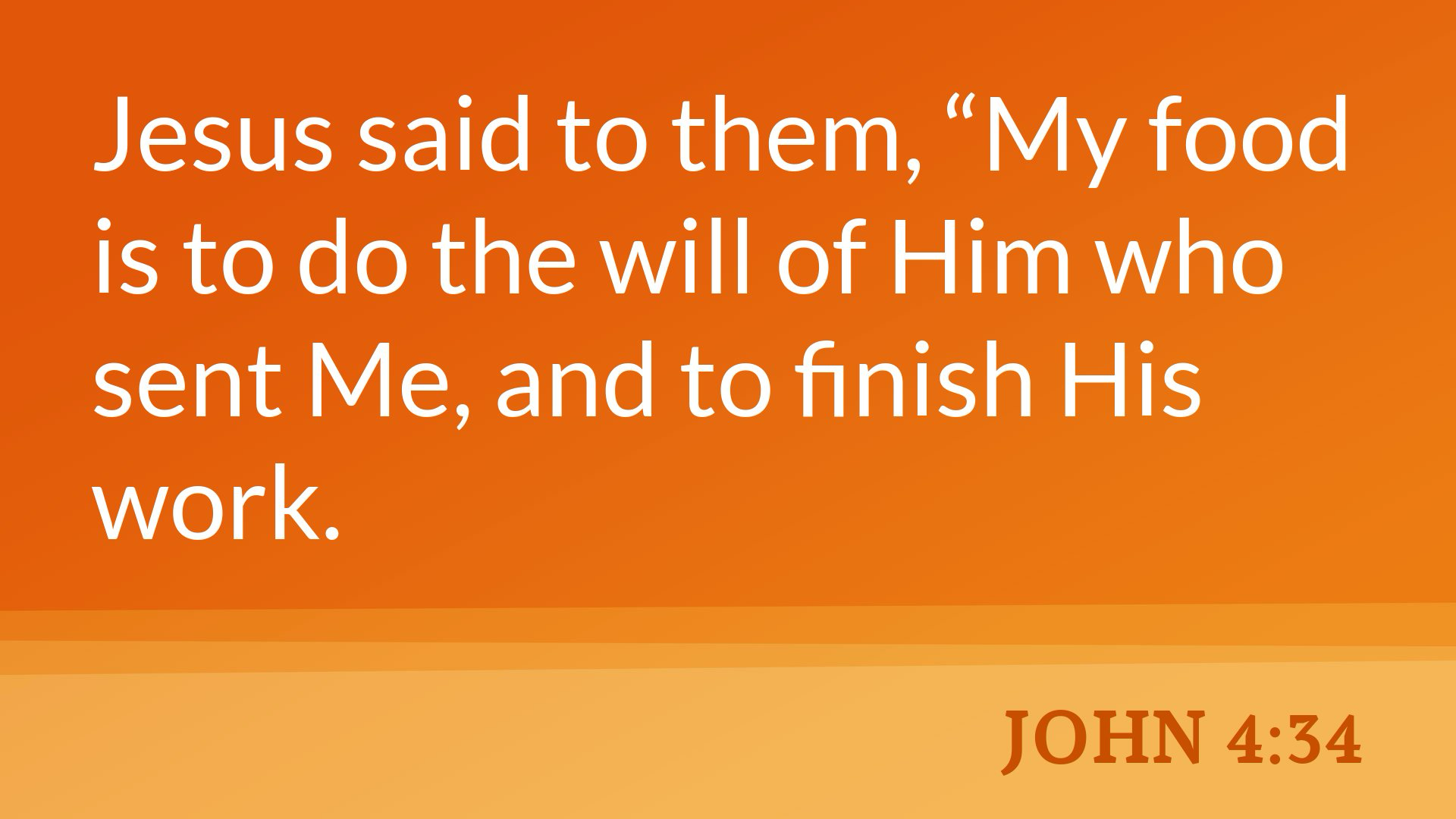
“My food is to do the will of Him who sent Me, and to finish His work.” (John 4:34)
This statement is not poetic exaggeration. It is identity.
Throughout John’s Gospel, Jesus repeatedly speaks of being sent. He is not self-appointed. He moves under divine commission. His satisfaction, His strength, and His focus are rooted in obedience to the Father’s will.
The Samaritan woman has just left to tell her city. Seeds of harvest are already forming. And while the disciples are thinking about lunch, Jesus is nourished by mission.
This is deeply revealing.
We often think of obedience as draining. We assume doing God’s will will cost us energy. But Jesus shows us something different: obedience is nourishment. Alignment with the Father’s will feeds the soul in a way that bread never can.
Physical hunger returns. Spiritual fulfillment endures.
This connects beautifully with what we have already seen in John 4. The woman came thirsty. Jesus offered living water. Now we see that He Himself lives from another source. Just as He gives living water, He lives by doing the Father’s will.
There is a pattern here for every believer.
When our lives are centered on Christ’s purposes, something stabilizes within us. Obedience is no longer mere duty—it becomes participation. We enter into the work of God, and in doing so, we experience the deep satisfaction of alignment with Him.
This does not mean rest is unnecessary or that physical needs are irrelevant. Jesus ate. He slept. He withdrew to pray. But His inner vitality did not depend on circumstances—it flowed from submission to the Father.
“My food is to do the will of Him who sent Me.”
This is not only the confession of the Son—it is the invitation of the disciple.
When we begin to see life through the lens of divine purpose, even ordinary moments take on eternal weight. Conversations matter. Obedience matters. Small acts of faithfulness matter. What seems hidden may be part of a harvest we cannot yet see.
The disciples thought the priority was bread. Jesus knew the priority was redemption.
Today, pause and consider: what feeds you most? Is it achievement, comfort, recognition—or obedience?
There is a satisfaction that comes from doing the will of God that cannot be manufactured. It is the quiet strength of being aligned with heaven. It is the deep peace of knowing you are walking in what He has given you to do.
The One who gives living water
also models living purpose.
And in Him, obedience becomes nourishment.