Seeking Jesus First Feb. 19, 2026

A Prophet Has No Honor
Today’s Reading: John 4:43–45
(Read the full passage before reflecting below.)
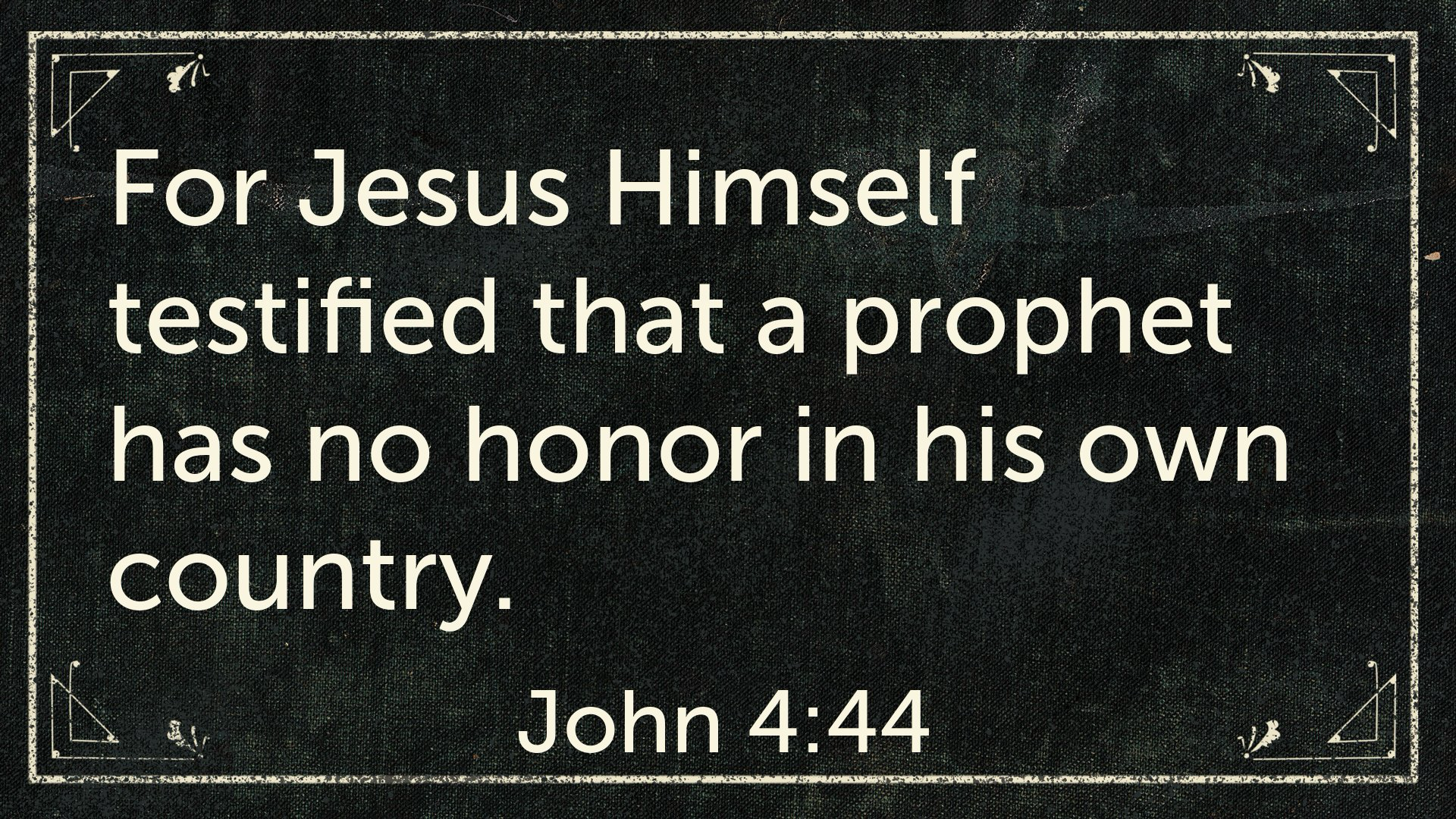
“Then after the two days He departed from there and went to Galilee. For Jesus Himself testified that a prophet has no honor in his own country.” (John 4:43–44, NKJV)
After two extraordinary days in Samaria—where many believed because of the woman’s testimony and then because they heard Him for themselves—Jesus returns to Galilee. The contrast is striking.
The Samaritans, long considered outsiders and religiously compromised, received Him as “the Savior of the world.” They listened. They believed. They honored Him.
But John reminds us of something sobering: “a prophet has no honor in his own country.”
Honor is not the same as enthusiasm. It is possible to welcome someone without truly receiving them. John tells us that the Galileans received Jesus because they had seen the things He did at the feast in Jerusalem. They had witnessed His signs. They appreciated His works. But appreciation is not necessarily honor.
Honor recognizes identity. Honor receives authority. Honor submits.
The danger of familiarity is subtle. Galilee was home territory. These were people who had heard of Jesus before, perhaps known His family, seen Him grow up. Familiarity can dull revelation. When we believe we already know someone, we can stop listening deeply. We can reduce the extraordinary to the ordinary.
This is not merely a historical observation—it is a spiritual warning.
The Samaritans heard Him and believed. The Galileans saw signs and welcomed Him. But signs alone do not produce mature faith. Jesus had already said that unless people see signs and wonders, they will not believe. Yet the faith that anchors the soul is not rooted in spectacle—it is rooted in His word.
It is possible to enjoy what Jesus does without honoring who He is.
John is preparing us for the encounter that follows with the nobleman, where faith will be tested beyond visible proof. But before we get there, we must pause here. This short passage invites us to examine our own posture toward Christ.
Do we honor Him—or are we merely impressed by Him?
Honor means we receive His correction, not just His comfort. We submit to His authority, not just admire His power. We trust His word, not only His works.
There is also something humbling in Jesus’ awareness of this reality. He knows that prophets are often rejected among their own people. Yet He goes anyway. He does not avoid Galilee because honor may be lacking. He continues His mission, speaking truth whether it is celebrated or resisted.
Christ is not dependent on our honor to remain faithful—but we are dependent on honoring Him to grow.
Today, let this truth settle into your heart: familiarity must never replace reverence. The One who walks among us, speaks to us, and blesses us is not merely a teacher or miracle worker. He is the Son of God, worthy of honor.
May we not reduce Him to what is comfortable or familiar.
May we receive Him fully.
And may our welcome be more than enthusiasm— may it be honor.