Seeking Jesus First Feb. 6, 2026

Give Me a Drink
Today’s Reading: John 4:7–9
(Read the full passage before reflecting below.)
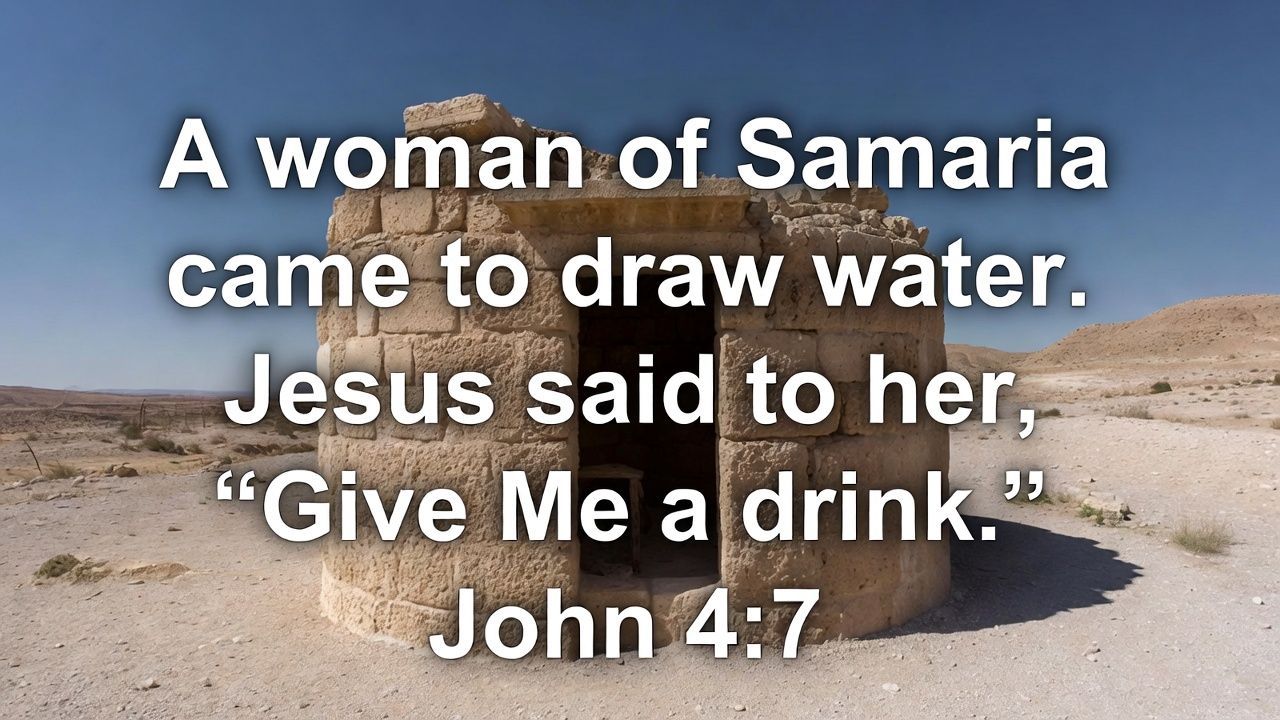
“A woman of Samaria came to draw water. Jesus said to her, ‘Give Me a drink.’” (John 4:7, NKJV)
The conversation at the well begins with a request—simple, human, and unexpected.
Jesus does not open with a sermon. He does not confront sin. He does not announce His identity. He asks for a drink.
This alone is startling. A Jewish man speaking to a Samaritan woman was already crossing cultural and religious boundaries. A rabbi speaking to a woman alone was socially improper. A Jew asking a Samaritan for water risked ceremonial defilement. And yet Jesus initiates the conversation with humility. He places Himself in a position of need.
The One through whom all things were made asks for water from a broken vessel.
This moment reveals something profound about the heart of God. Redemption often begins not with correction, but with connection. Jesus does not demand trust—He invites conversation. He does not lead with authority—He leads with presence. Grace does not shout across the distance; it steps into it.
John has already told us that Jesus was weary from His journey. His request is genuine. He is tired. He is thirsty. He is fully human. But this is not weakness—it is intentional vulnerability. Jesus allows the woman to see Him not as an untouchable religious figure, but as a man who shares the limits of humanity.
This is how love opens doors.
The woman immediately notices the barrier that has been crossed. “How is it that You, being a Jew, ask a drink from me, a Samaritan woman?” Her question reveals how deeply divided the world had become. Separation had been normalized. Hostility had been inherited. Silence had replaced relationship.
But Jesus does not retreat. He does not explain Himself yet. He simply remains present.
This teaches us something essential about how God works in human hearts. Transformation rarely begins with answers—it begins with trust. Jesus does not rush her past her confusion. He lets the question surface. He allows her to name the distance before He bridges it.
There is also a quiet reversal taking place here. The woman comes to the well to draw water, but Jesus is the One who is truly seeking. She expects to meet no one. Instead, she encounters the Son of God, who has already arranged the meeting. What she sees as an ordinary task is the setting for a divine encounter.
And notice the timing. She comes alone, likely at an unusual hour. Isolation has become familiar to her. Yet Jesus meets her there—not in the synagogue, not during worship, but in the rhythm of daily life. God often meets us not where we perform religion best, but where we feel most exposed.
“Give Me a drink” is more than a request. It is an invitation. Jesus is drawing her into dialogue that will soon reveal her thirst, her history, and ultimately her hope. But He does not rush there. Love moves at the pace of relationship.
This moment also challenges us. How often do we imagine that God only approaches us once we are ready, cleaned up, or informed? John 4 corrects that assumption. Jesus speaks first. Jesus asks first. Jesus risks rejection first.
And in doing so, He shows us how the kingdom advances—not through force, but through love that is willing to be misunderstood.
Today, let this scene linger in your heart. The God who needs nothing chooses to ask. The Savior of the world begins with a sentence that opens a door rather than closes one. And a woman who came for water begins a conversation that will change her life forever.
Grace often starts quietly.
Redemption often begins with a question.
And sometimes, the first words of salvation sound like this:
“Give Me a drink.”